
Stories from the Stead
The Corn That Whispered Her Name
Mid-September 2024, and Alan Bishop stood in a quarter-acre test plot outside Pekin, Indiana, hand-harvesting ears of corn he'd spent years developing. This wasn't commodity grain from a seed catalog—this was Elise, an heirloom hybrid he'd bred specifically for pot still distillation, a variety that matured in 90-100 days and carried Southern Indiana's glacial-south terroir in every kernel. As he walked the rows pulling ears, the wind moved through the dry stalks and leaves, and Alan swears it whispered the name: Elise. He'd been calling it "the new corn" up until that moment, but the field itself christened the varietal, the way old distillers believed spirits had their own intelligence, their own will.
Back at Old Homestead, those ears hung in a screened drying room—part corn crib, part herb sanctuary—until they were ready for his black hawk corn sheller. But before Alan would even consider mashing Elise for whiskey, he made grits. No sugar, no butter, just grits. "If the grits aren't good, then there is no reason to make mash at all," he explained to anyone who'd listen. The second batch he converted with barley malt, testing how the sugars developed, how the flavors opened. Only after Elise passed the grits test did she earn her place in Old Homestead's mash tuns, becoming the living agricultural link between Alan's seed-breeding past and his distilling present. Now when you taste our Black Forest whiskeys, you're tasting a corn variety that literally spoke its own name into existence, grown by the man who distills it, in soil that remembers the homesteads that once covered these hills with their own pot stills.
Sunshine Spirits: A Tribute Born from Moonshine
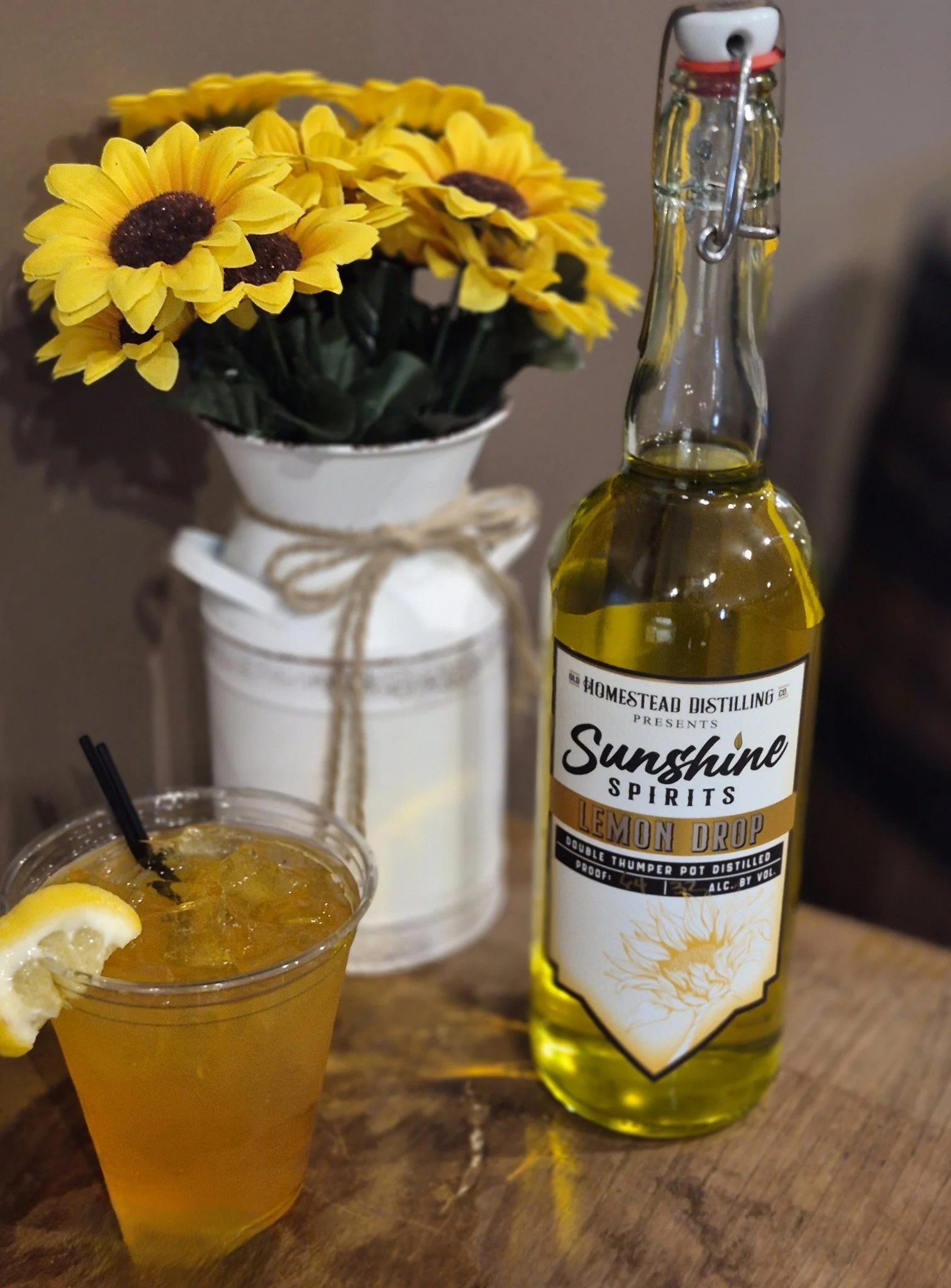
Everyone asks Alan why he distills sunflower seeds when corn and rye are right there, easier and more predictable. The answer goes back years, to a home distiller named Moonshine Mike who sent Alan a sample of raw sunflower seed distillate out of nowhere. Alan didn't think much would come of it—sunflowers are botanicals, oily and difficult to work with, nothing like grain. But the sample was good, intriguing, a flavor profile that didn't exist in the whiskey world. Alan couldn't just copy Mike's work—that's not how distillers of integrity operate—so he took the idea and transformed it. He started malting the black oil sunflower seeds, then roasting them, layering in process complexity that turned a curiosity into Sunshine Spirits: Old Homestead's signature line of sunflower seed moonshine that tastes like nostalgia, like penny candy and root beer floats, like childhood summers distilled into liquid. The name itself is Alan's tribute to Mike—if Mike made moonshine (distilled at night, hidden, illicit), then Alan would make sunshine: daytime spirits, out in the open, electric stills humming under Indiana sun instead of backwoods darkness.
At Old Homestead, Alan grinds those raw black oil sunflower seeds more like a botanical than a grain, treating them with the respect you'd give wormwood or juniper. Everything gets double-thumpered through pot stills, intensifying the aroma and creating a base spirit so clean and distinct that when he flavors it—Cherry Bomb, Butterscotch, Lemon Drop, Newton Stewart—you still taste the sunflower underneath, nutty and warm and utterly unlike anything else on the American spirits landscape. Moonshine Mike probably never imagined his backyard experiment would become a commercial product line, but that's what happens when you send samples to an alchemist: ideas transform, evolve, become something new while honoring what came before.
Naming the Stills: Goddesses and Reverence
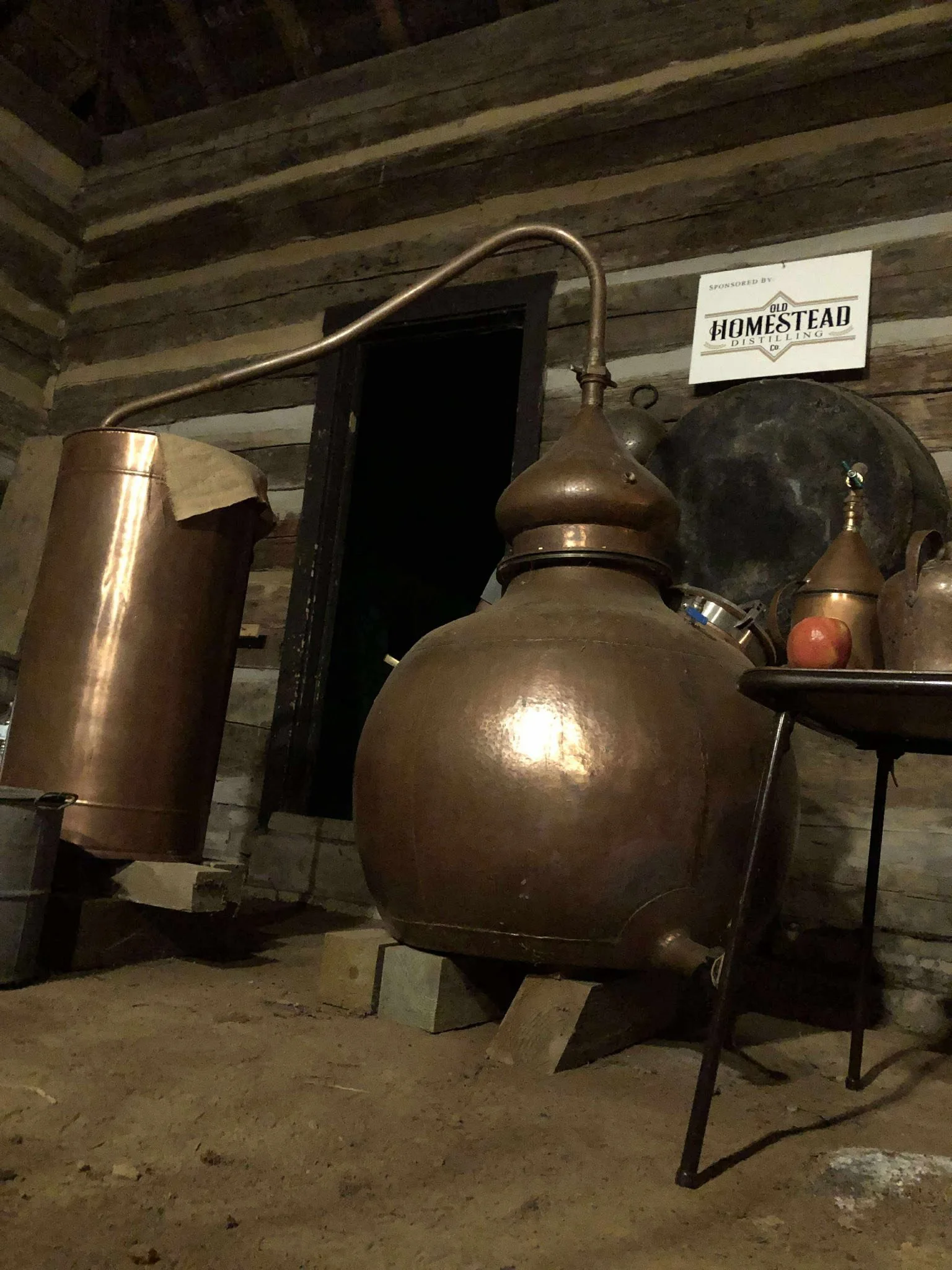
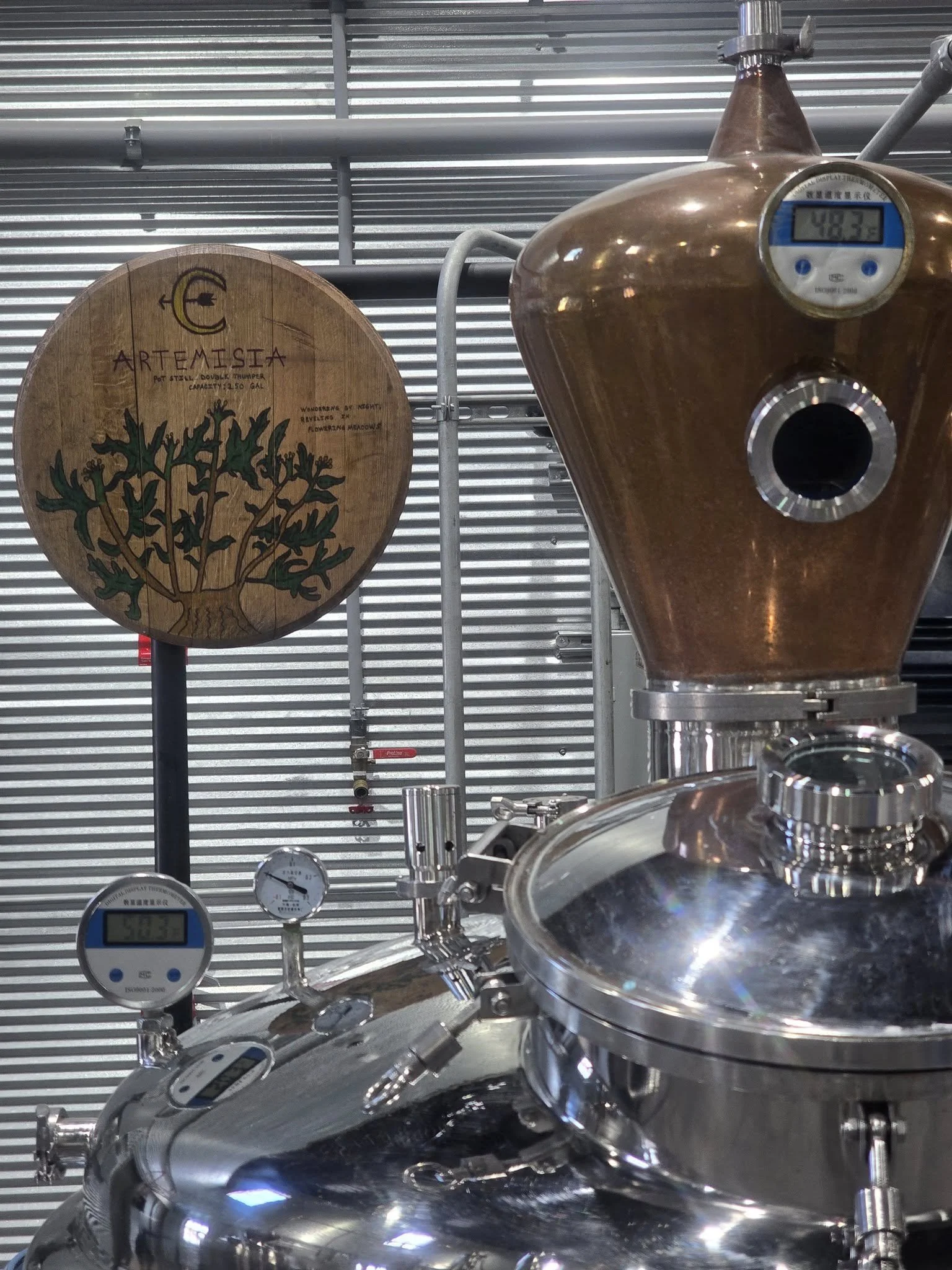
Alan Bishop refuses to distill on unnamed equipment. "I wouldn't sail on a ship with no name and I won't ever work a pot still with no name," he told an interviewer years ago at Spirits of French Lick, where his stills bore names like Lilith, Inanna, Sophia, and Dianna—mythical goddesses honored for their power and magic. At Old Homestead, that tradition continues with new stills named after feminine deities, each one christened before its first run because Alan believes pot stills have "motherly functions of birthing a spirit," and you don't disrespect the mother of your whiskey by treating her like anonymous industrial machinery. When he talks about his stills, he uses pronouns—she runs hot today, her vapor is coming off clean—and if you think that's superstition, you're missing the point. Distilling is transformation: grain becomes sugar becomes alcohol becomes spirit. That's alchemy in the literal sense, and alchemists have always understood that the tools matter, the names matter, the intention you bring to the work matters.
Alan keeps written records of every distillation run: temperature, humidity, sun or clouds, moon phase, season—and his own mood that day. "My attitude during that run will definitely play a part in the finished product," he insists. It's biodynamic distilling taken to its logical extreme, acknowledging that spirits aren't just chemistry, they're energy, and the person tending the still imparts something of themselves into every batch. At Old Homestead, when you taste our Black Forest releases or Sunshine expressions, you're tasting the result of runs overseen by a man who logs moon phases, names his stills after goddesses, and believes—truly believes—that his mood affects the distillate. That's not marketing. That's the actual practice happening in our production room every day, and it's why our spirits taste different. Intention shows up in the glass.
Malting Elise: The Ritual Before the Mash
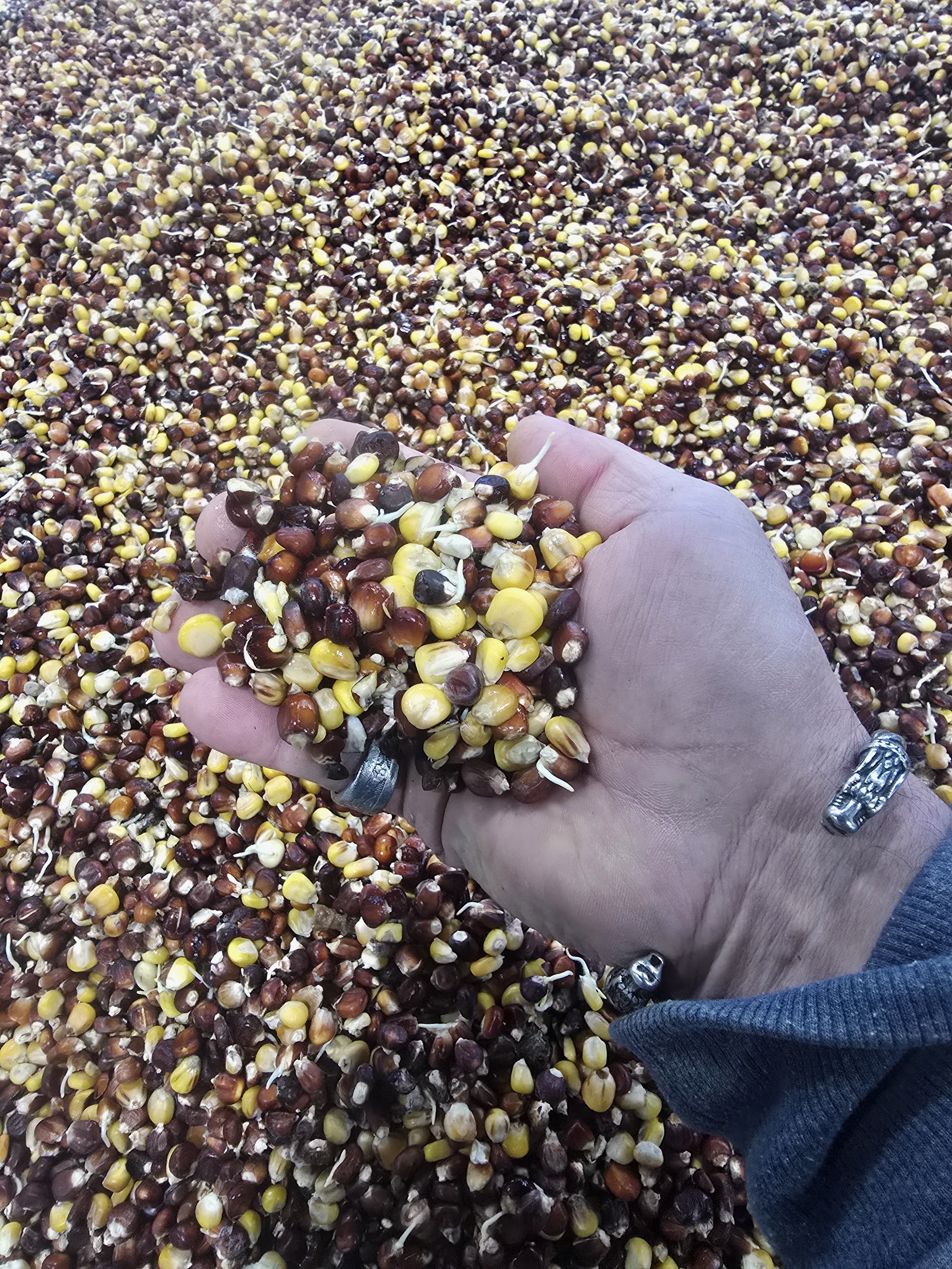
Late 2025, Alan posted a video on Facebook that most distilleries would never bother filming: Elise corn spread across malting floors at Old Homestead, soaking and sprouting, being turned by hand as enzymes activated and starches began converting to sugar. Commercial distilleries buy malted grain from suppliers like Briess or Rahr. Alan grows his own corn, then malts it himself, controlling the entire chain from seed selection through germination to kilning. It's absurd from an efficiency standpoint—malting is labor-intensive, finicky, requires constant monitoring—but it's absolutely essential to the Black Forest Method Alan's developing here. Malting wakes the grain up. It convinces the seed that spring has come, that it's time to grow, and in that awakening all the grain's potential flavors bloom. By malting Elise himself, Alan ensures that the enzymes converting starches during fermentation are indigenous to the corn itself, not introduced from external barley malt. The flavors stay true: Elise talking to Elise, Southern Indiana soil speaking through Southern Indiana grain, with no outside interference. In the video, you see Alan's hands moving through the sprouting kernels, checking moisture, feeling for the sweet spot where rootlets have emerged but the sprout hasn't consumed too much sugar. This is farming and chemistry and intuition braided together, the kind of labor that most modern distillers have mechanized away because time is money and efficiency matters. But at Old Homestead, Alan's building something different: a distillery where every step—from breeding seed to malting grain to naming stills to logging moon phases—receives the same obsessive attention. Most customers tasting our whiskey will never know about the malting floors, never see Alan's hands in the sprouting Elise. But they'll taste the difference, even if they can't name it. That's the whole point of doing it right.
The Man Who Draws on Barrels
Alan Bishop makes spirits. But late at night, after the distilling is done, he picks up a marker or a brush. And he draws.
He draws on the tops of his barrels. Not labels. Not logos. Art.
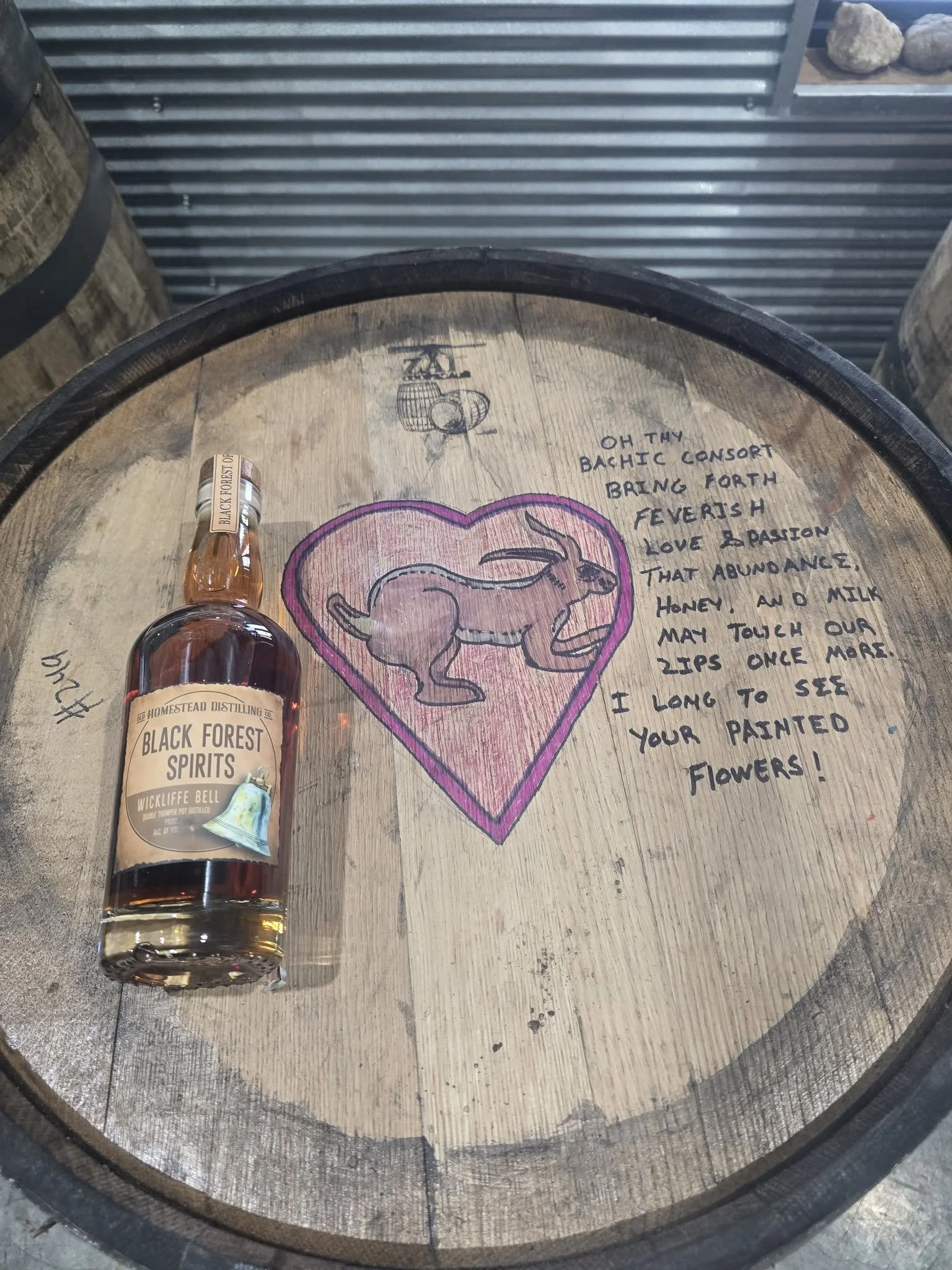
One night he drew a rabbit inside a red heart. Around it he wrote words about love and longing. He called it a charm. Something old-fashioned. Something magical. He shared it and said simply — "Turned the barrel head into a written charm for fun last night."
Another time he drew a skull. But this skull had a sunflower for a halo. Sunflowers are at the heart of what he makes at Old Homestead. So a skull wearing a sunflower means something to him. Life and death. Giving and taking. He wrote four words under it: "FIRST IT GIVETH..."
Then just this week he painted two fish on a barrel. A moon sits above them. A moon sits below them. And in big letters he wrote: "SALVATION VIA CREATION." Three words that say everything about who Alan is. He believes that making something — really making it, with your hands and your mind and your heart — saves you. Every barrel is proof of that.
He has also made barrel tops as gifts. When a close friend had a baby girl, Alan took a barrel head and turned it into a birth chart for the child. A piece of wood that once held whiskey. Now it holds the story of a life just beginning.
Alan says the barrel is never just a container. "If the barrel shapes the spirit, the wood shapes the barrel." Everything shapes everything. That is the alchemy he talks about.
So when you tour Old Homestead Distilling Co., look at the barrels. Some of them have stories drawn right on top. A rabbit. A skull with a sunflower. Two fish under the moon.
Alan Bishop created those. Late at night. Just for the love of it.
That is the kind of man who makes your spirits.
Wild Yeasts and the Ghosts of Lost Distilleries
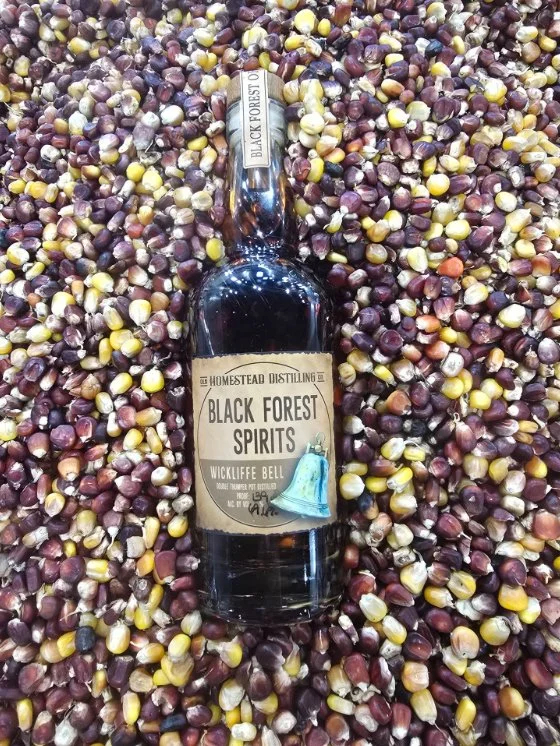
Alan Bishop hunts ghosts. Not metaphorically—literally, through his podcast If You Have Ghosts You Have Everything—but also agriculturally, through wild yeast capture from sites where Southern Indiana distilleries once operated and are now forgotten ruins. At Old Homestead, some of our ferments use wild yeast strains Alan has propagated from these locations: Newton-Stewart (a lost town now underwater since Patoka Lake was built), Wickliffe (another submerged settlement), and other Black Forest sites where homestead stills once bubbled and commercial distilleries employed whole towns. Alan talks about scraping yeast off the walls of abandoned distilleries on the East Coast, facilities still dusty and cobwebbed but alive with lactobacillus and wild Saccharomyces strains that have survived decades without feeding. He brings that thinking home to Indiana, capturing ambient yeast from historic distillery locations and propagating them in our fermenters. It's terroir in the truest sense: place-specific microbes that haven't existed in commercial whiskey since Prohibition killed off regional distilling and everything standardized into Fleischmann's packets.
When you taste Old Homestead spirits fermented with Newton-Stewart yeast, you're tasting microbial descendants of strains that worked in stills before the lake swallowed that town. You're drinking a resurrection, a historical reenactment performed at the cellular level. Alan's been a historical reenactor for years—he volunteers at Locust Grove Farm Distillery, works with Indiana DNR to rebuild the historic distillery at Spring Mill State Park, researches forgotten Hoosier distillers for his blog—but the yeast work is his most direct communion with the past. Those microbes remember what the land used to taste like before industrial agriculture, before standardization, before craft distilling became about replicating proven formulas instead of discovering what your specific place and moment can produce. At Old Homestead, we're not chasing Kentucky bourbon profiles or trying to clone Islay scotch. We're listening to what Southern Indiana wants to be, fermented by the region's own wild microbes, distilled by a man who believes the ghosts of old distillers guide his hands. That's not a marketing story. That's the literal methodology happening in our mash tuns right now.